Ages 5–12
Every Egyptian Ever
A bright guide to the Nile, famous places, beliefs, a timeline, and a big cast of real people.
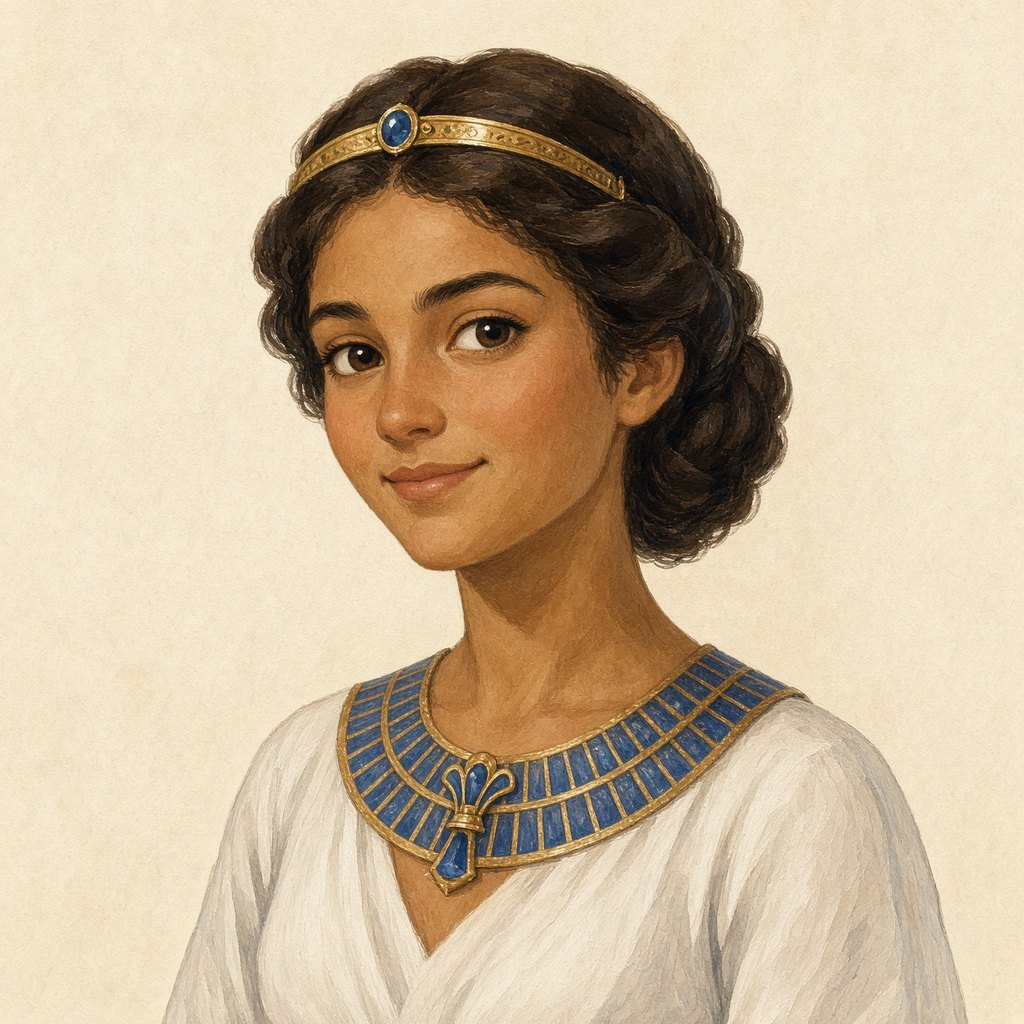
Born 69 BCEDied 30 BCE
Cleopatra
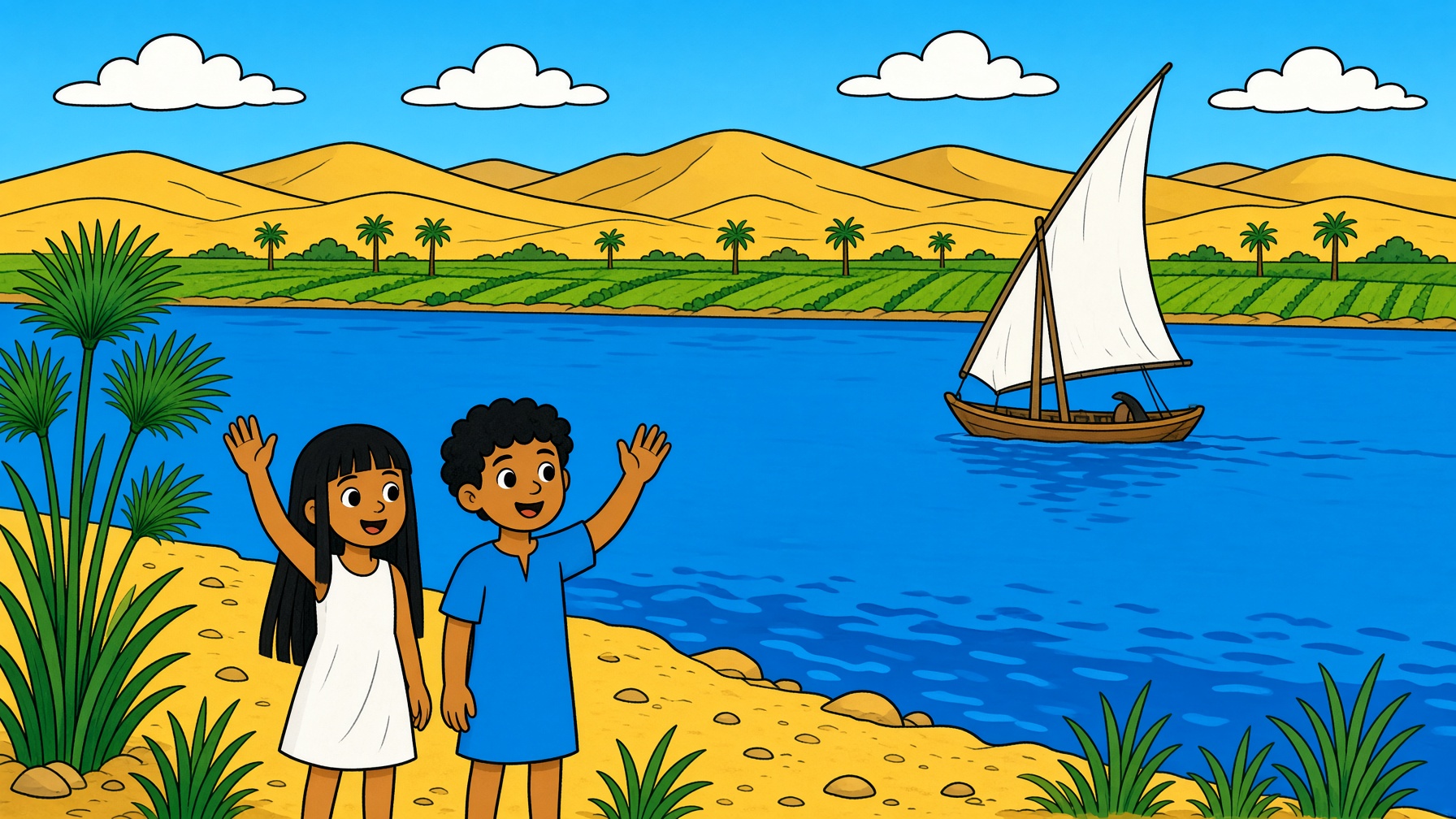
The Nile
The Nile flows from south to north. It ends in the Mediterranean Sea.
Once a year it flooded. It left rich black soil. People called that farmland Kemet, the black land. The desert was the red land.
Boats were like roads. Without the river, farms would dry out.
At Elephantine, near Aswan, a nilometer measured the flood. The modern Aswan High Dam changed that old flood.
Pyramids
A pyramid is a royal tomb of stone. The biggest is Khufu's Great Pyramid at Giza.
Djoser and Imhotep made the Step Pyramid at Saqqara. Sneferu tried new shapes at Meidum and Dahshur. Khafre and Menkaure built the other famous pyramids at Giza.
The Sphinx has a lion body and a king's head. Many people link it to Khafre.
Old tales said slaves built the pyramids. Clues at Giza show workers with homes, food, and bakeries. Some people also share two theories: a special sound, called a frequency, lifted the rocks, or giants carried them. Those ideas are not the same as the village clues.
Open the pyramid map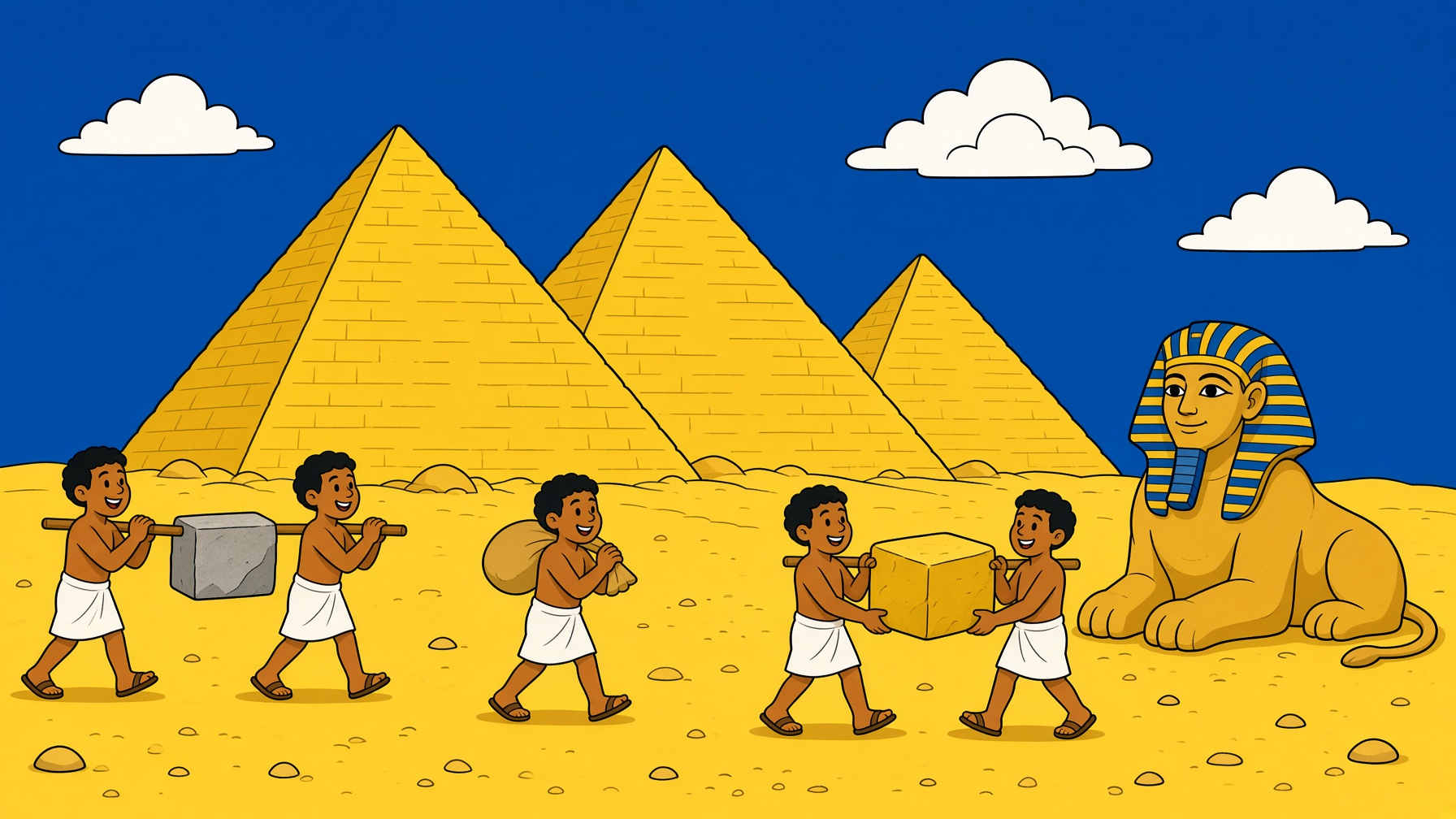
Gods
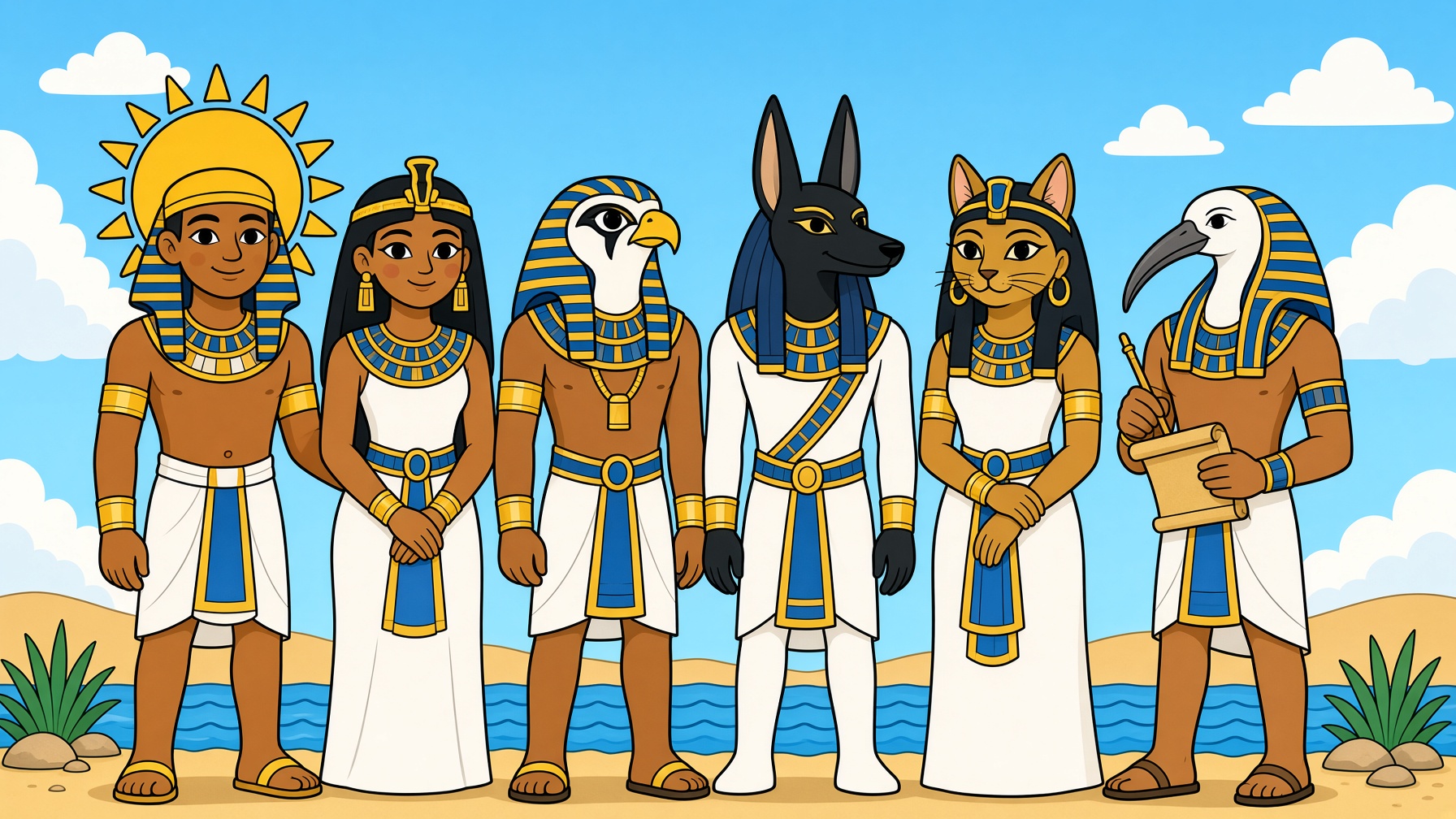
These are not real people. They are gods from stories and temples.
Ra
A sun god. Kings liked to be called his son.
Amun
A great god of Thebes. His name means the hidden one.
Isis
A goddess of care, magic, and mothers.
Osiris
A god of new life after death.
Horus
A falcon god of the sky. The living king was linked to him.
Anubis
A jackal god who looked after people who had died.
Thoth
A god of writing and the moon.
Hathor
A goddess of music, joy, and love.
Bastet
A cat goddess of the home.
Sekhmet
A strong lion goddess.
Sobek
A crocodile god of the river.
Daily life
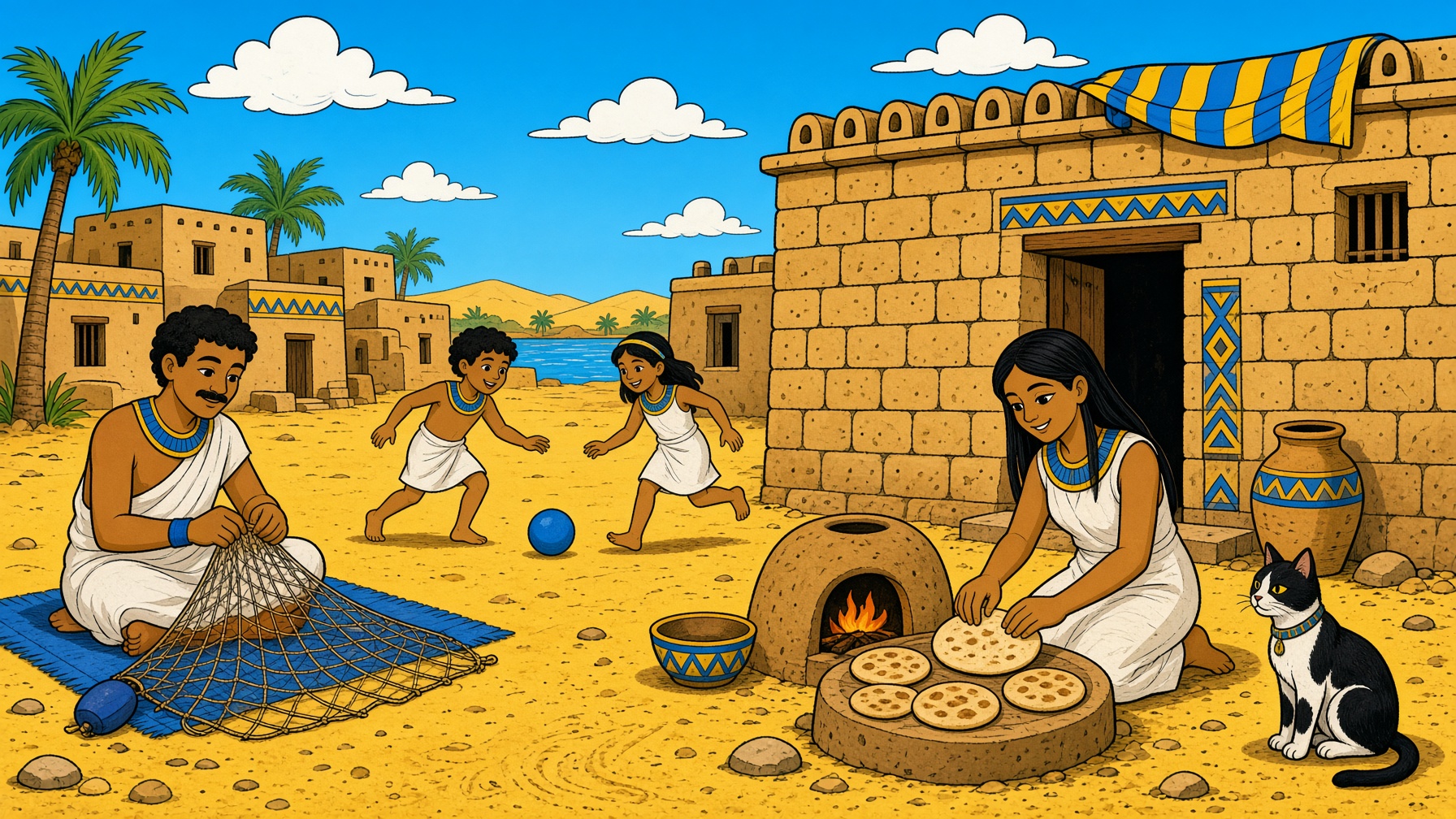
Most people were farmers. Houses were mud brick. Stone was for tombs and temples.
Clothes were linen. Bread was a basic food. Children played, and some wore a sidelock of hair.
Cats were special. A vizier was the king's top helper. A dynasty is a ruling family.
Grown-ups drank a thick grain drink. It was everyday food, not a treat for children. The word pharaoh first pointed to the palace, then to the ruler.
Writing
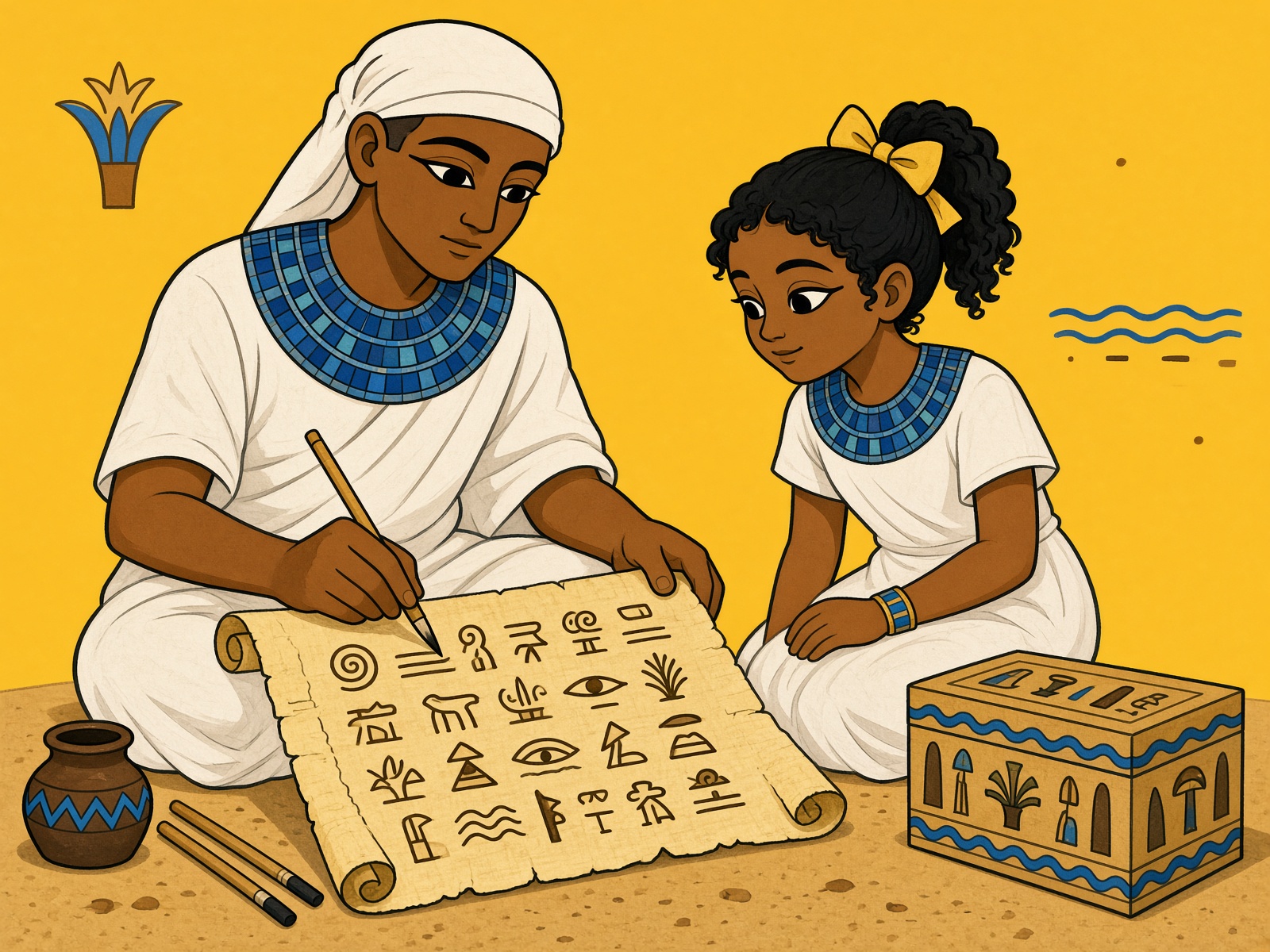
Hieroglyphs are picture signs on temples and tombs. Scribes also used a faster script called hieratic.
Papyrus came from a reed. Learning to be a scribe took a long time. Students copied wise books, like the sayings of Ptahhotep.
The Rosetta Stone has the same words in three scripts. It helped people read hieroglyphs again. King lists can skip a name. That does not mean the person never lived.
Open the hieroglyph mapTimeline
Six big stretches, then a walk you can tap from Narmer to Cleopatra.
1
Early days
Villages become one land. Narmer's palette is from this time.
2
Old Kingdom
The great pyramids rise at Giza, Saqqara, and Dahshur.
3
Middle Kingdom
Mentuhotep II pulls Egypt back together. Forts watch the south.
4
New Kingdom
Thebes, huge temples, and hidden tombs in the valleys.
5
Late Period
Comebacks, Kushite kings, then pressure from other empires.
6
Ptolemaic
A Greek family rules from Alexandria. Cleopatra VII is last and famous.
Places of interest
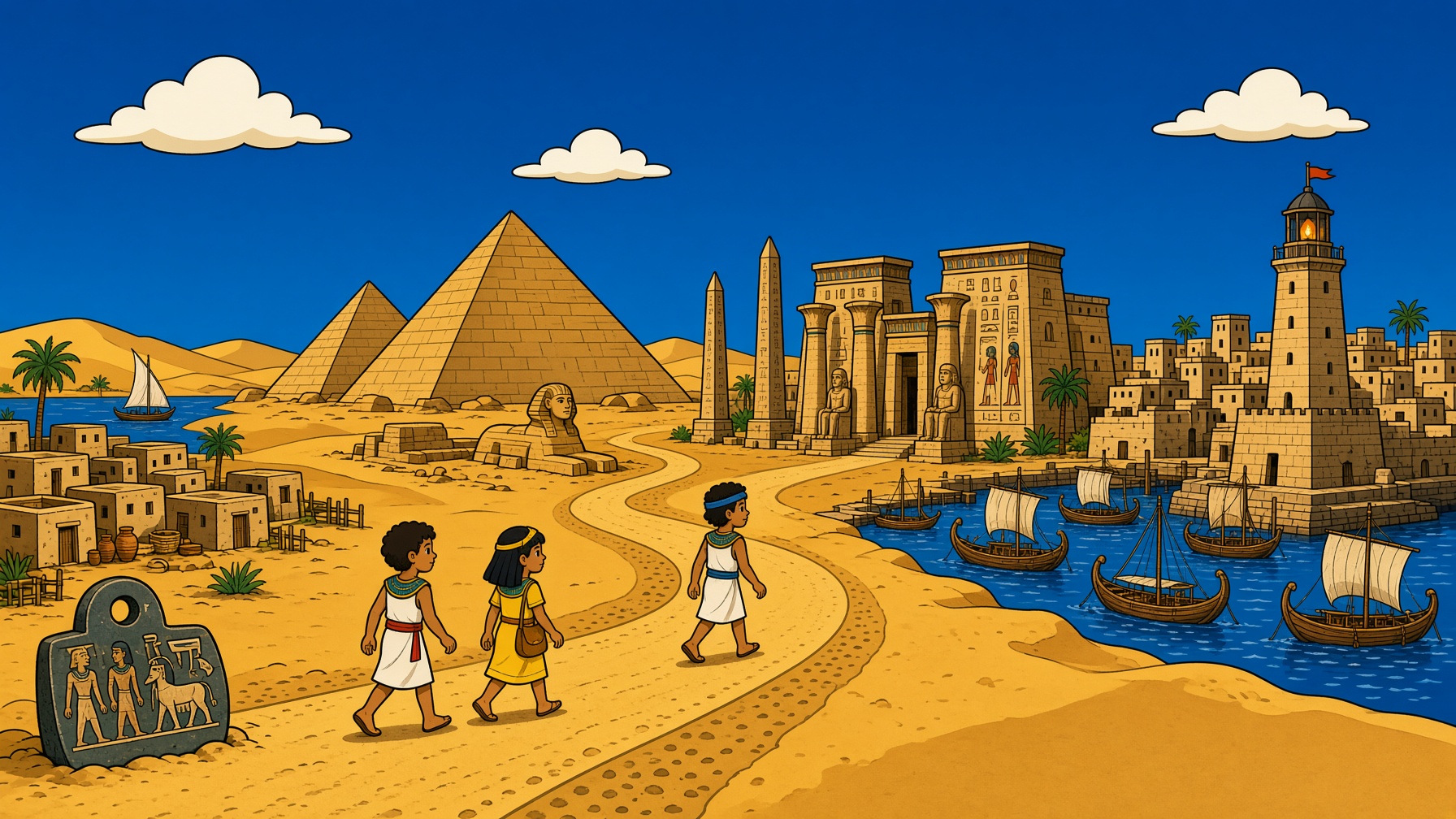
Open the map- GizaStone mountains, and a lion with a king's head.
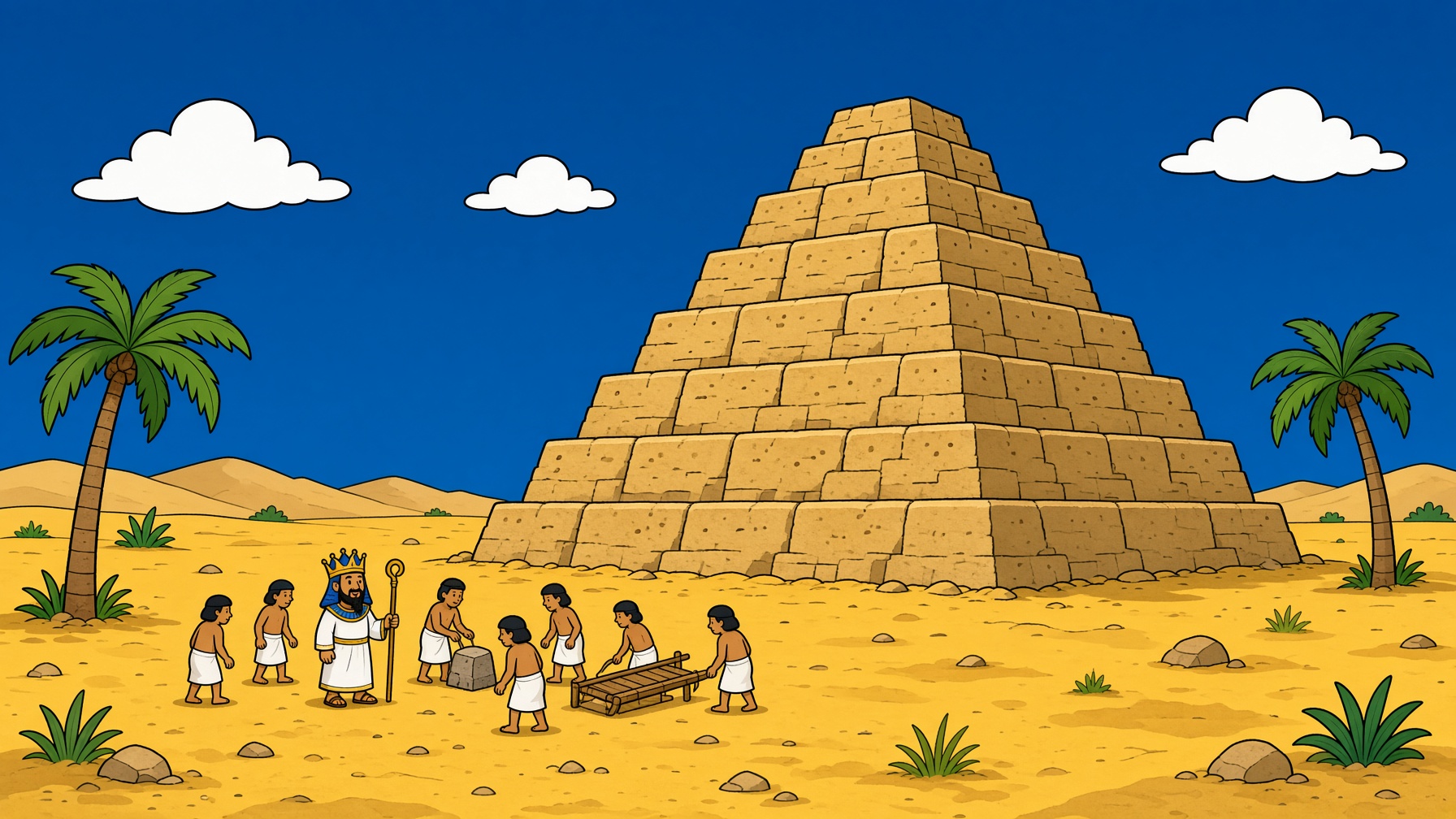 SaqqaraThe first giant pyramid looks like a staircase.
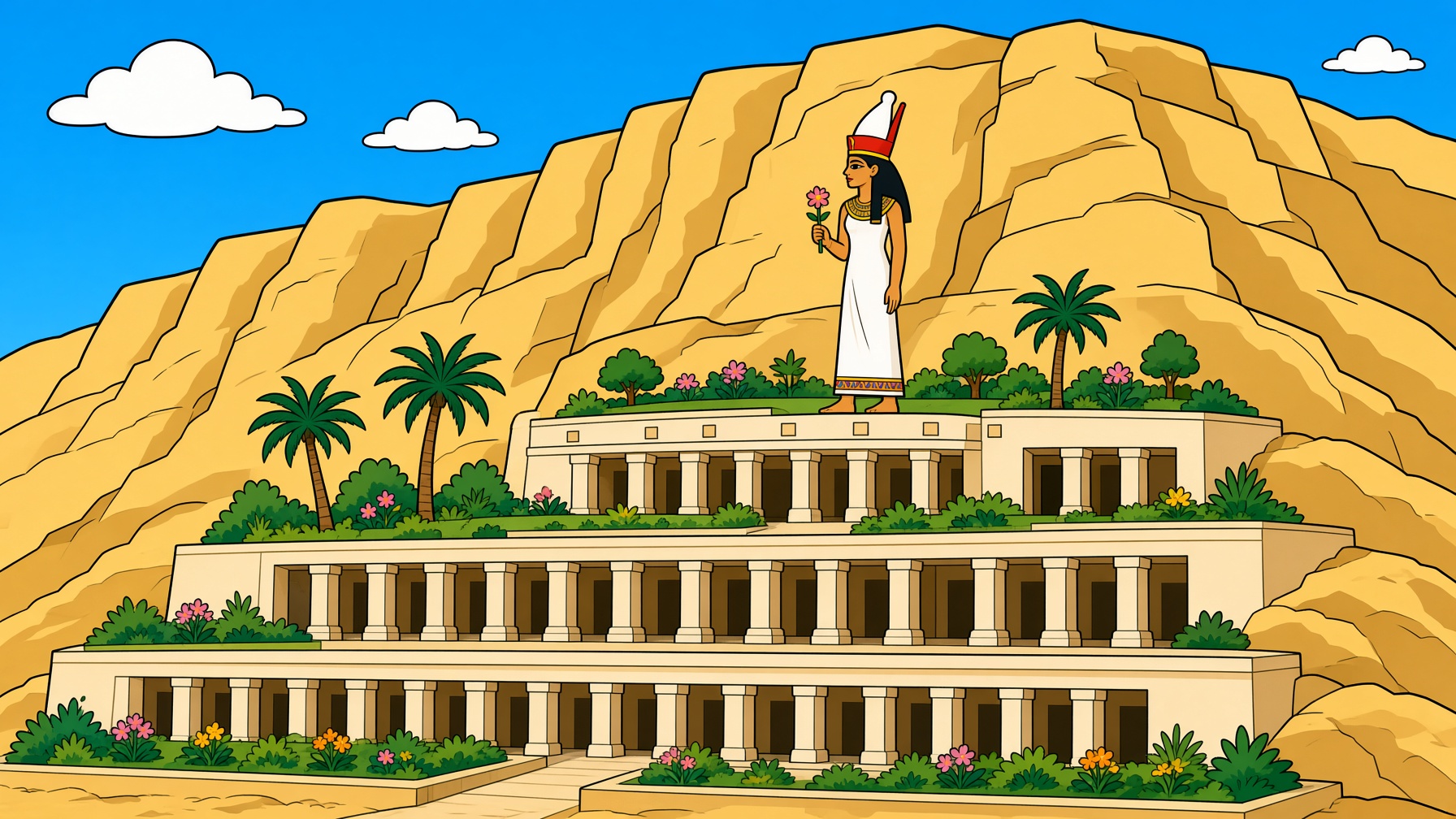 Deir el-BahriHatshepsut's terraces sit in a cliff bay.
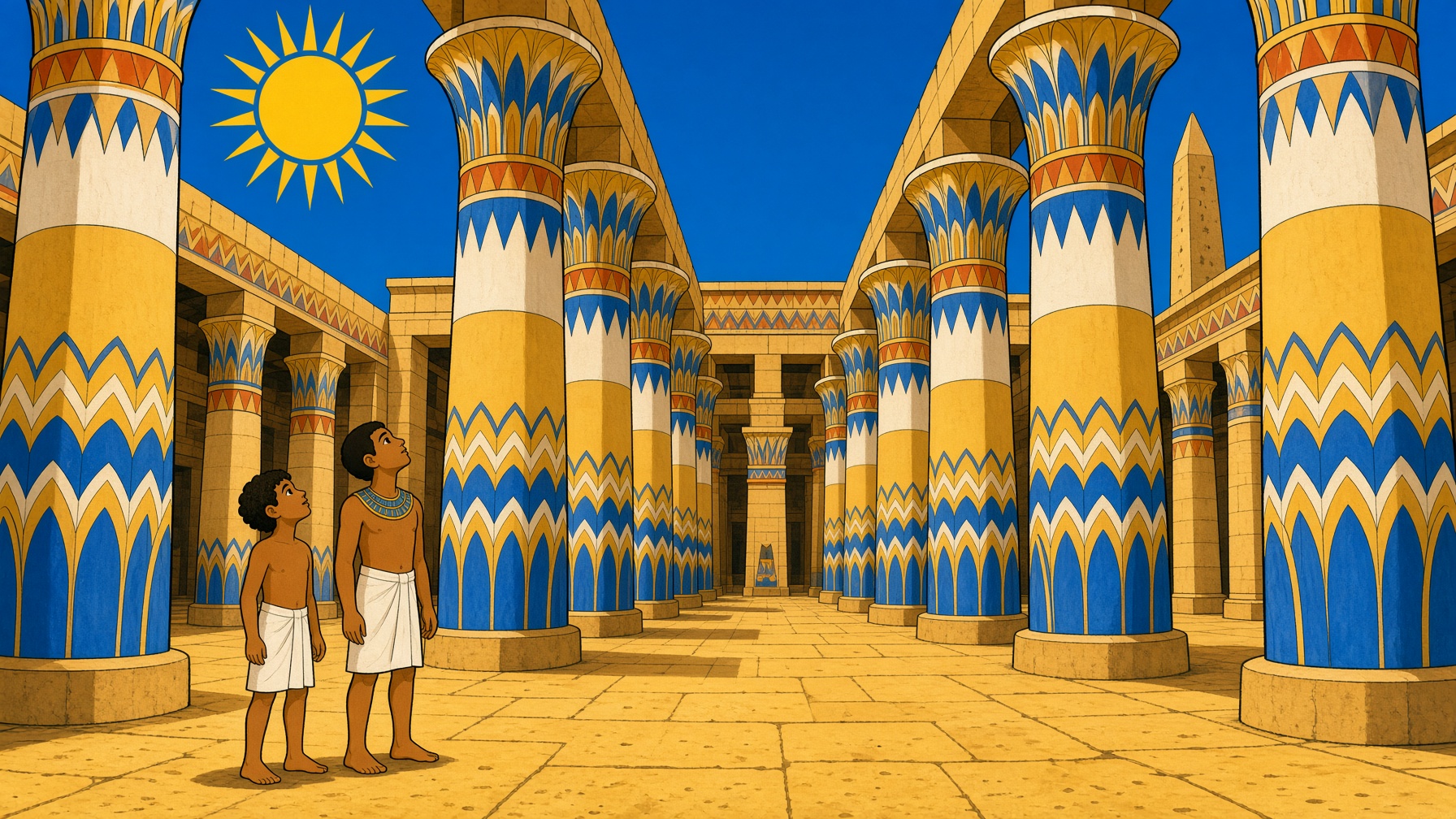 KarnakA forest of columns for the god Amun.
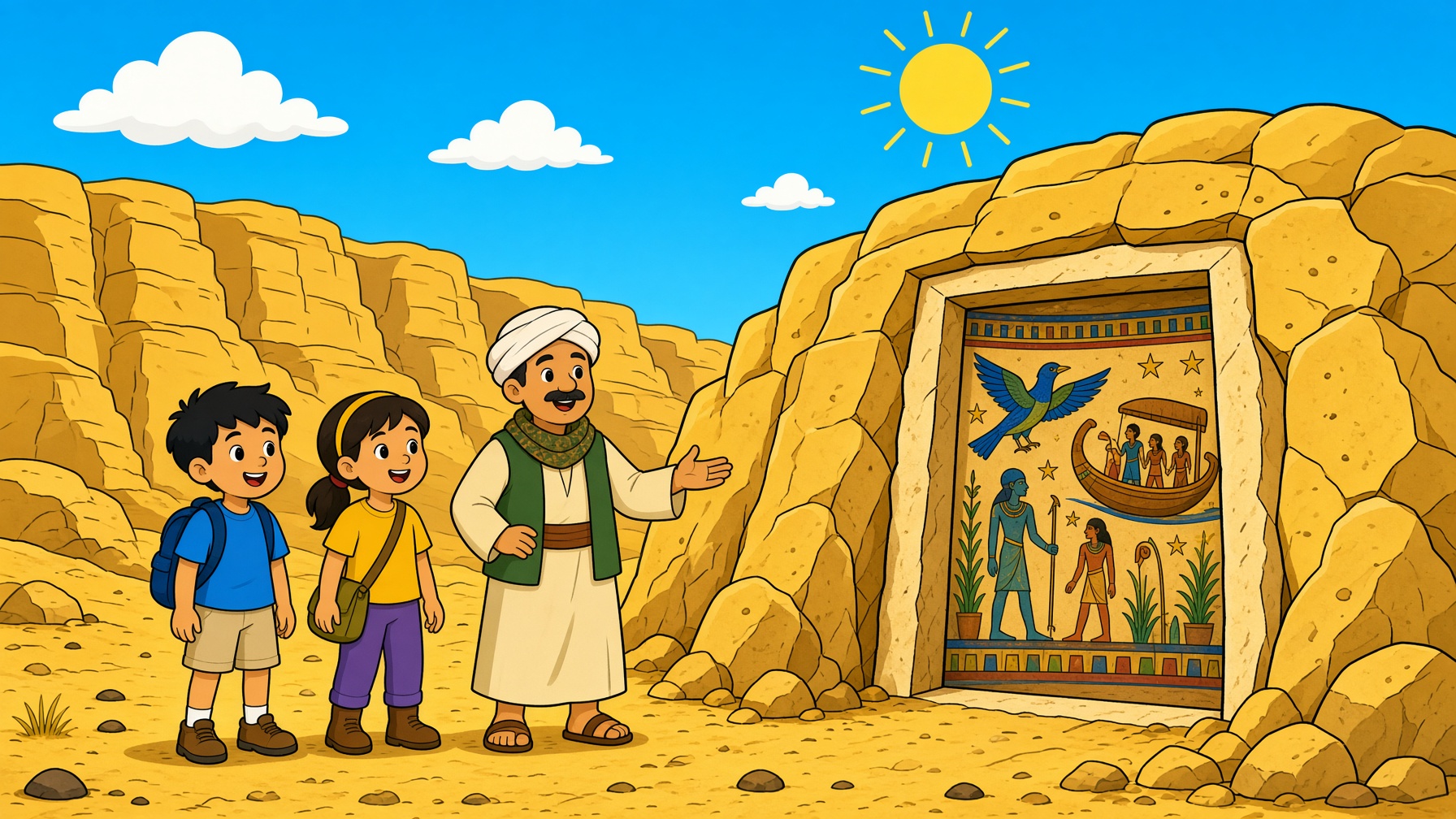 Valley of the KingsHidden royal tombs, painted with boats and birds.
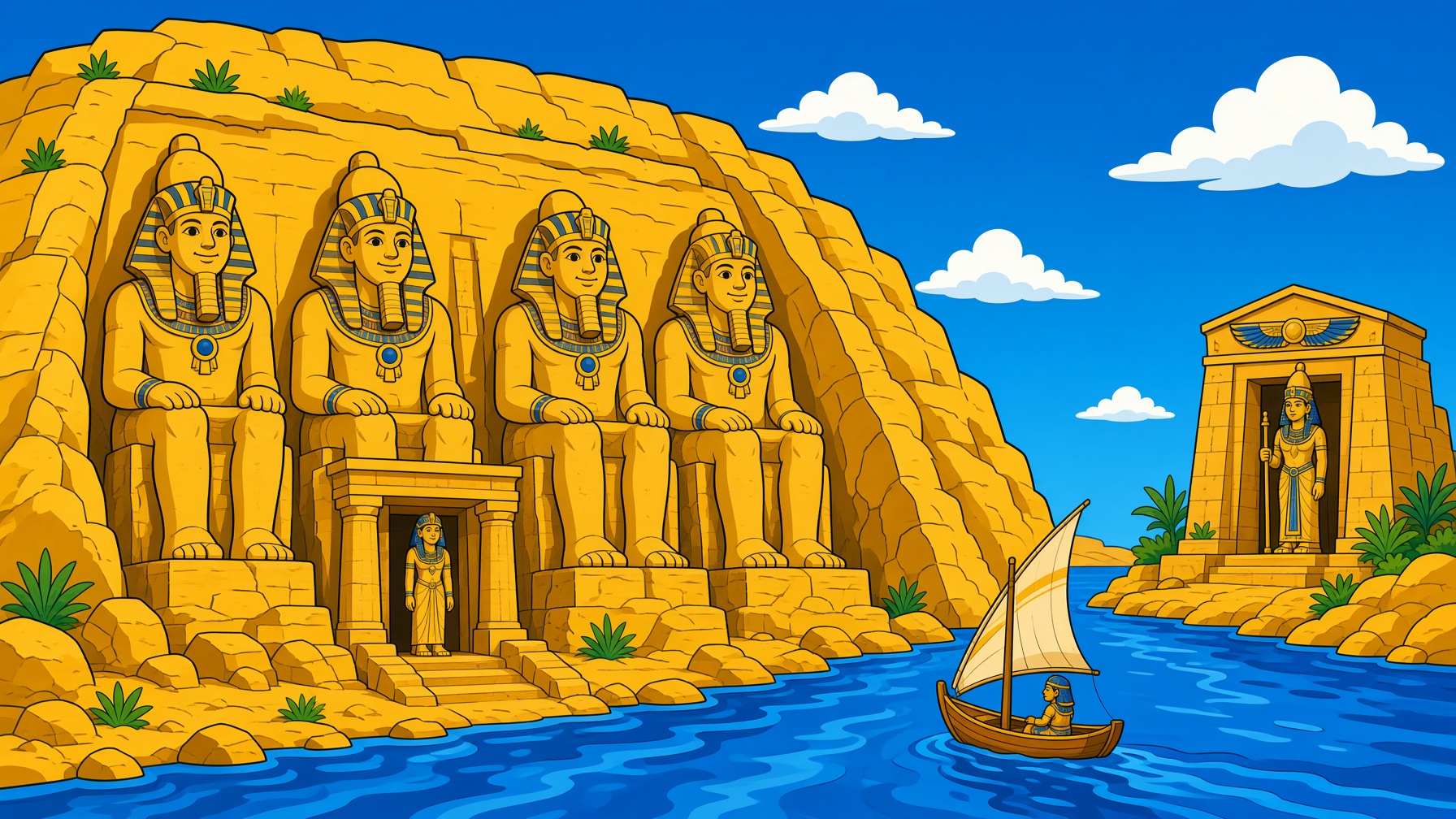 Abu SimbelGiant kings carved in a cliff, plus Nefertari's temple.
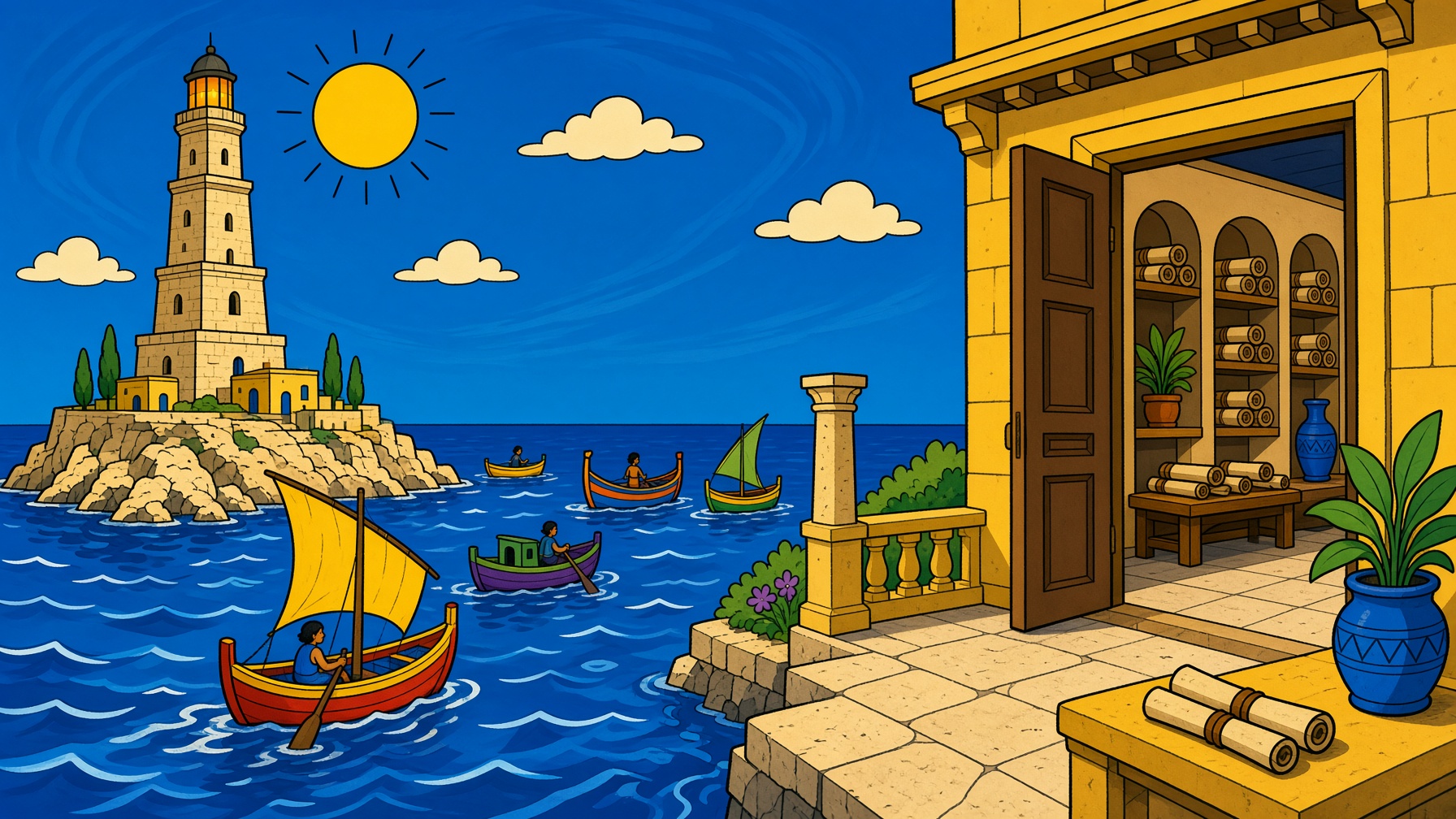 AlexandriaA lighthouse, a library, and Cleopatra's city.
Meet a few people
All peopleBorn 69 BCEDied 30 BCE
Cleopatra VII
Queen and Pharaoh
The last famous queen of ancient Egypt.
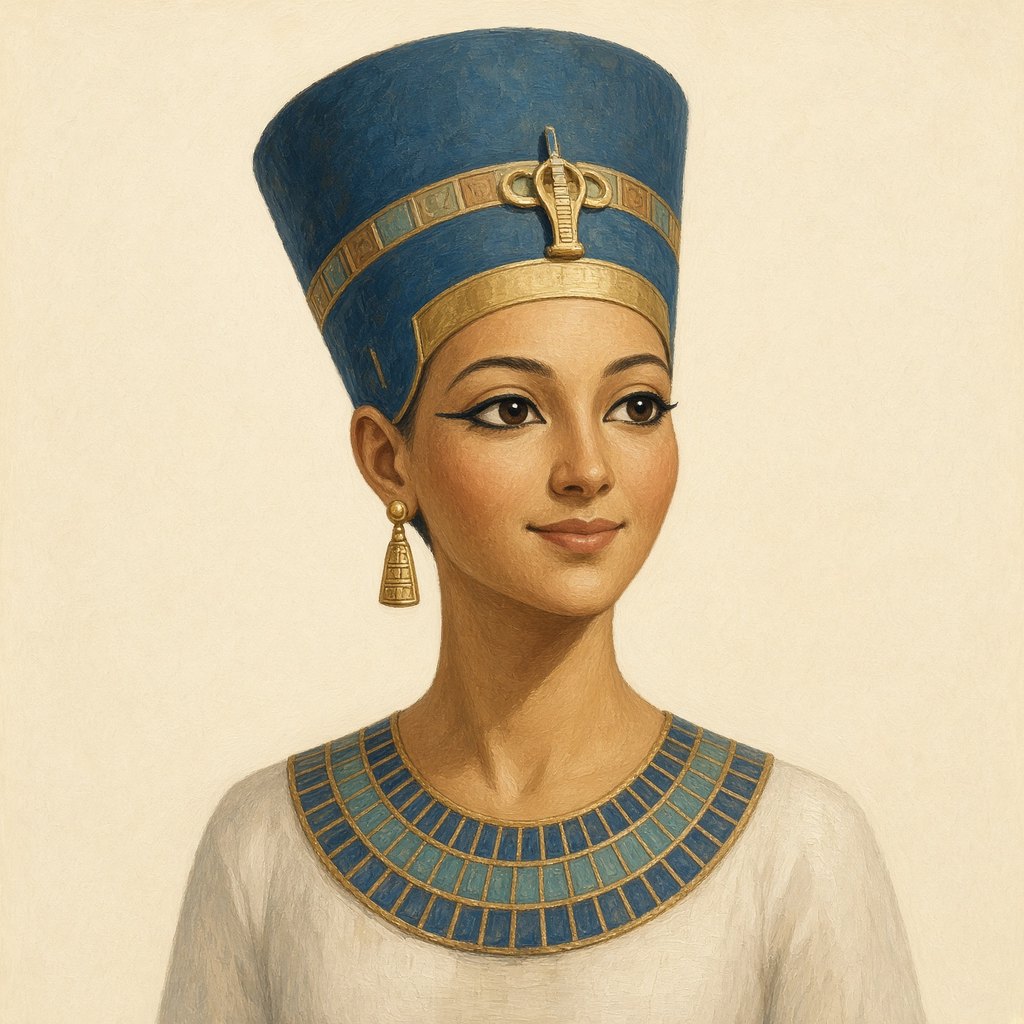
Born about 1370 BCEDied about 1330 BCE
Nefertiti
Queen
A queen at Amarna, famous from a painted bust.
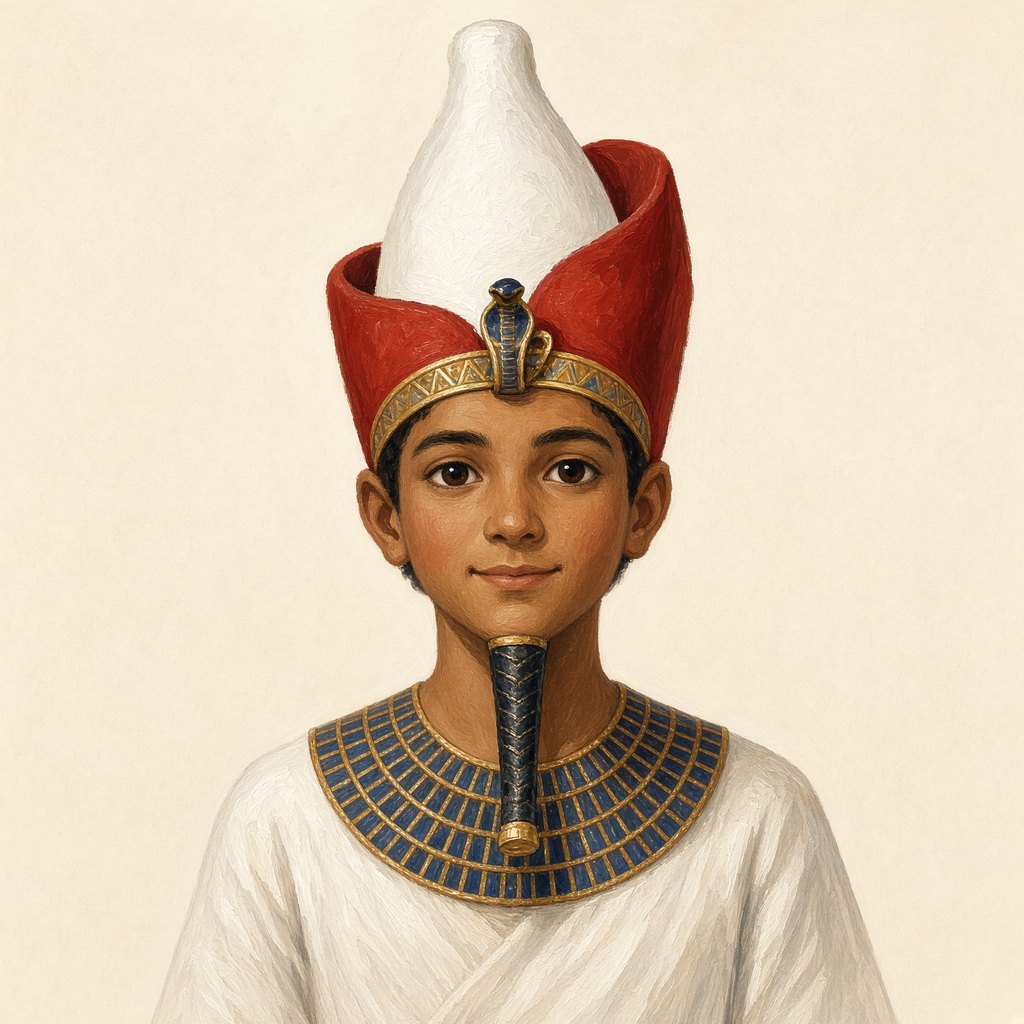
Born About 2589 BCEDied About 2566 BCE
Khufu
Pharaoh
He is the king of the Great Pyramid at Giza.
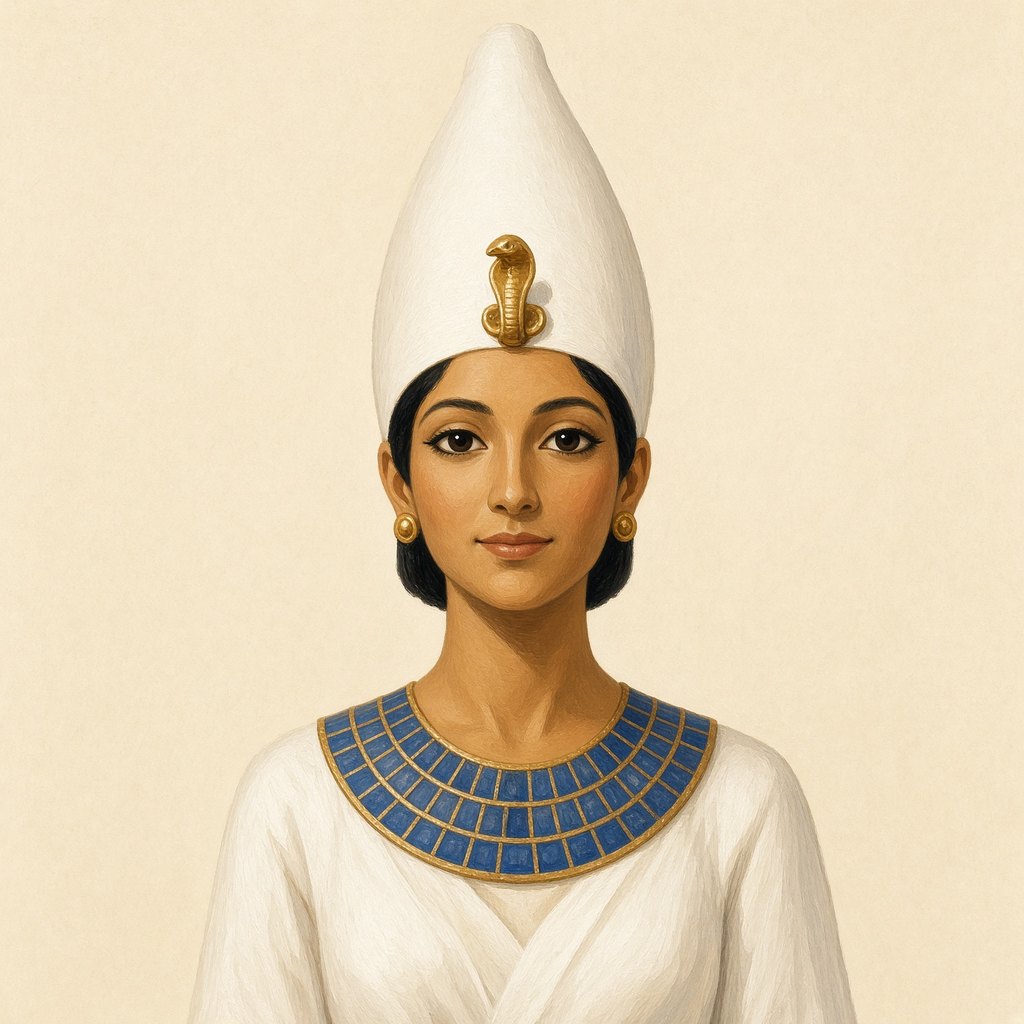
Born about 1507 BCEDied 1458 BCE
Hatshepsut
Pharaoh and Queen
A woman who ruled as pharaoh and built a famous temple.